Tubuq: Difference between revisions
Jump to navigation
Jump to search
No edit summary |
No edit summary |
||
| (13 intermediate revisions by the same user not shown) | |||
| Line 1: | Line 1: | ||
{{Termshort | |||
| pronunciation = | |||
| kelabit = 1. tubuq | |||
| kel_derived_a = [[metubuq]] | |||
| kel_derived_b = [[petubuq]] | |||
| english = (noun) offshoot | |||
| eng_derived_a = (verb) to propagate | |||
| eng_derived_b = (past tense) propagated | |||
| malay = | |||
| mal_derived_a = | |||
| mal_derived_b = | |||
| synonyms = | |||
| antonyms = | |||
}} | |||
---- | |||
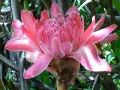
2. Tubuq is also the generic term for plants in the ginger family ([[Wikipedia:Zingiberaceae|Zingiberaceae]]). | |||
Apart from the common ginger ([[liyeh]]), there is a variety of wild gingers (genus zingiber) known to the Kelabits, used in their cooking or for other medicinal purposes. | Apart from the common ginger ([[liyeh]]), there is a variety of wild gingers (genus zingiber) known to the Kelabits, used in their cooking or for other medicinal purposes. | ||
The young shoots of | The young shoots of Tubuq Berek Siaq (red pig ginger) for instance is eaten as a vegetable and the flower is used as medicine for dogs. But it was unknown to the scientific community until 1998 when Dr. Hanne Christensen together with Dr. Ida Theilade, a botanist specialising in gingers, described it scientifically and published it in the Edinburgh Journal of Botany. They named it the Zingiber Kelabitianum in honour of the Kelabit people. [[#References|<sup>(1)</sup>]] See [http://www.wildborneo.com.my/images/clp081513.jpg external image] | ||
== Wild Ginger Varieties Known to the Kelabits == | == Wild Ginger Varieties Known to the Kelabits == | ||
<gallery> | <gallery> | ||
Image:Richard Howard DSC00604-2007-gingerflower.jpg|'''[[Busak luduh|Busak Luduh]], | Image:Richard Howard DSC00604-2007-gingerflower.jpg|'''[[Busak luduh|Busak Luduh]], Tubuq Terebak'''<br>Photo by [[user:Richard Howard|Richard Howard]] | ||
Image:Richard Howard DSC00713-unknown.jpg|''' | Image:Richard Howard DSC00713-unknown.jpg|'''Tubuq ?'''<br>Photo by [[user:Richard Howard|Richard Howard]] | ||
Image:Richard Howard DSC00595-2007-ginger.jpg|''' | Image:Richard Howard DSC00595-2007-ginger.jpg|'''Tubuq ?'''<br>Photo by [[user:Richard Howard|Richard Howard]] | ||
Image:Richard Howard DSC00522-2007-youngplant.jpg|''' | Image:Richard Howard DSC00522-2007-youngplant.jpg|'''Tubuq ?'''<br>Photo by [[user:Richard Howard|Richard Howard]] | ||
Image:Gkvaerner DSC02588.jpg|'''Busak | Image:Gkvaerner DSC02588.jpg|'''Busak Tubuq Tesiluk (?)'''<br>Photo by [[user:Gkvaener|Wayne Kalang]] | ||
Image:Gkvaener pic2.jpg|''' | Image:Gkvaener pic2.jpg|'''Tubuq (?)'''<br>Photo by [[user:Gkvaener|Wayne Kalang]] | ||
Image:Default_Photo.jpg|''' | Image:Default_Photo.jpg|'''Tubuq Berek Siaq'''<br>(Zingiber Kelabitianum)<br>Photo by ?<br>See [http://www.wildborneo.com.my/images/clp081513.jpg external image] | ||
Image:Default_Photo.jpg|''' | Image:Default_Photo.jpg|'''Tubuq Berek Bataq'''<br>(Zingiber Pseudopungens)<br>Photo by ? | ||
Image:Default_Photo.jpg|''' | Image:Default_Photo.jpg|'''Tubuq Buen'''<br>Photo by ? | ||
Image:Default_Photo.jpg|''' | Image:Default_Photo.jpg|'''Tubuq Kering Ebpaq'''<br>(Amomum Anomalum)<br>Photo by ? | ||
Image:Default_Photo.jpg|''' | Image:Default_Photo.jpg|'''Tubuq Kering Buduk'''<br>(Amomum Dimorphum)<br>Photo by ? | ||
Image:Default_Photo.jpg|''' | Image:Default_Photo.jpg|'''Tubuq Inib'''<br>(Etlingera Nasuta)<br>[http://www.wildborneo.com.my/images/clp092703.jpg See external image] | ||
Image: | Image:Tubu tana'.JPG|'''Tubuq Tanaq'''<br>(Etlingera Punicea))<br>Photo by [[User:Jenkaleh|Jenkaleh]]<br>[http://www.geocities.com/RainForest/Vines/8983/gingers/punicea.jpg See external image] | ||
Image:Default_Photo.jpg|'''Tubuq Abang'''<br>(Zingiber Longipedunculatum)<br>[http://www.botany.org/plantimages/ImageData.asp?IDN=abot86-5&IS=700 See external image] | |||
Image:Default_Photo.jpg|'''Tubuq Abang Budaq'''<br>(Zingiber Martinii)<br>[http://www.botany.hawaii.edu/herbarium/digitallib/collections/hlaplants/pdfs/Zin_Zingiber_martinii_w.pdf See external image] | |||
Image:Default_Photo.jpg|'''Tubuq Berek Bataq'''<br>(Zingiber Pseudopungens)<br>[http://www.equatorialexotics.com/html_plant/zingibar_psuedopungens.htm See external image] | |||
</gallery> | </gallery> | ||
| Line 26: | Line 45: | ||
#[[Wikipedia:Ethnobotany|Ethnobotany]] of the Iban & Kelabit by Hanne Christensen | #[[Wikipedia:Ethnobotany|Ethnobotany]] of the Iban & Kelabit by Hanne Christensen | ||
[[Category:T| | [[Category:T|tubuq]] | ||
[[Category:Plant| | [[Category:Plant| tubuq]] | ||
Latest revision as of 23:12, 4 August 2017
Usage
- {{{Usage1}}}:
- {{{Usage2}}}:
- {{{Usage3}}}:
Translations
- Kelabit - English
- 1. tubuq - (noun) offshoot
Synonyms
Antonyms
2. Tubuq is also the generic term for plants in the ginger family (Zingiberaceae).
Apart from the common ginger (liyeh), there is a variety of wild gingers (genus zingiber) known to the Kelabits, used in their cooking or for other medicinal purposes.
The young shoots of Tubuq Berek Siaq (red pig ginger) for instance is eaten as a vegetable and the flower is used as medicine for dogs. But it was unknown to the scientific community until 1998 when Dr. Hanne Christensen together with Dr. Ida Theilade, a botanist specialising in gingers, described it scientifically and published it in the Edinburgh Journal of Botany. They named it the Zingiber Kelabitianum in honour of the Kelabit people. (1) See external image
Wild Ginger Varieties Known to the Kelabits
-
-
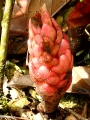 Tubuq ?
Photo by Richard Howard -
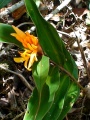 Tubuq ?
Photo by Richard Howard -
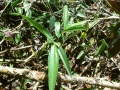 Tubuq ?
Photo by Richard Howard -
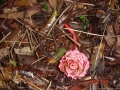 Busak Tubuq Tesiluk (?)
Photo by Wayne Kalang -
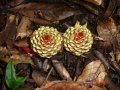 Tubuq (?)
Photo by Wayne Kalang -

-
Tubuq Berek Bataq
(Zingiber Pseudopungens)
Photo by ? -
Tubuq Buen
Photo by ? -
Tubuq Kering Ebpaq
(Amomum Anomalum)
Photo by ? -
Tubuq Kering Buduk
(Amomum Dimorphum)
Photo by ? -
-
-
-
-


References
- Ethnobotany of the Iban & Kelabit by Hanne Christensen